How to Clean Black Spots off Patio Slabs
Keeping your patio clean and welcoming is essential for enjoying your outdoor space, whether you are entertaining guests or simply relaxing at home. If you have noticeable black spots on your patio slabs, you are not alone. These marks can make even a well‑laid patio look neglected and dull. In this complete guide on how to clean black spots off patio slabs, we explain what these black spots are, why they appear, and most importantly, how to clean them effectively and safely.
We also cover ways to prevent them returning and advice on regular maintenance. For residents in and around Bradford, Jimmy’s External Cleaning Services offers professional support to bring your patio back to life.
What Black Spots on Patio Slabs Are
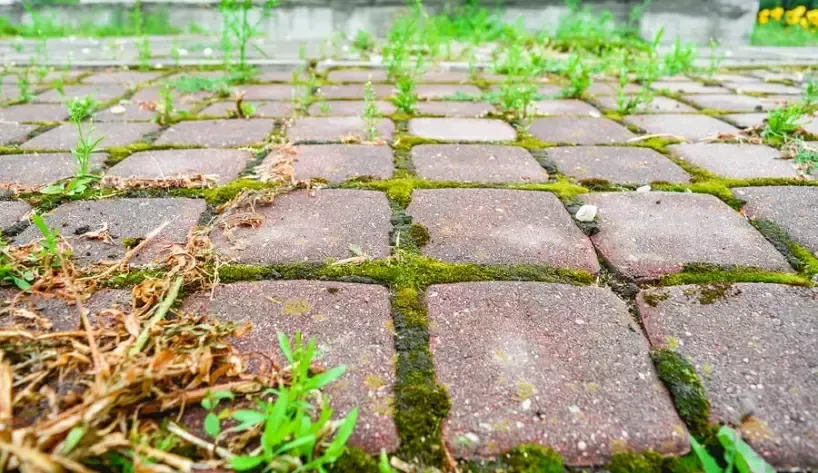
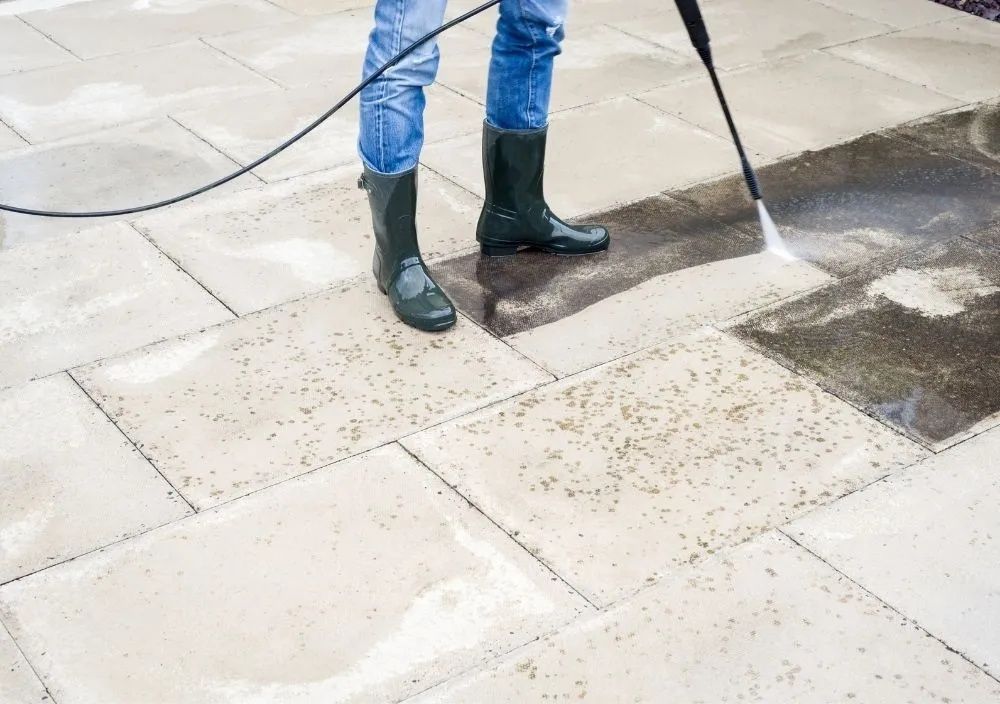
Black spots on patio slabs are dark patches or speckles that appear on the surface of paving stones. They may range from small flecks to larger marks that cover whole slabs. These spots are not part of the natural colour of the stone or concrete; they are stains caused by organic material, mould, algae, dirt or pollution.
In many cases, black spots are:
- Green‑black or dark grey in colour
- Textured or slightly raised, or sometimes flat and smooth
- Most noticeable in shaded, damp or north‑facing areas
Identifying the nature of the stain helps you choose the right cleaning method and avoid harming the patio surface.
Why Black Spots Appear on Patios
Black spots commonly appear due to a combination of moisture and organic debris. Key causes include:
1. Mould and Mildew Growth
Where patios stay damp for long periods, mould and mildew thrive. These fungi can leave visible dark marks and spread quickly.
2. Algae and Moss
Algae and moss grow on shaded areas with little sunlight. They form slimy, dark patches that sometimes look like black stains.
3. Dirt, Dust, and Pollution
Wind‑blown dust and environmental pollutants can settle on paving slabs. Over time, these build up and develop into stubborn marks.
4. Leaf Debris and Organic Matter
Leaves, flower petals, bird droppings and other organic matter can break down and stain the surface.
5. Efflorescence or Mineral Deposits
Occasionally, black spots may be caused by mineral deposits that react with moisture. These are different from mould but can look similar.
Understanding the source of the spots is vital before starting a cleaning routine. This reduces the chance of ineffective cleaning and repeated staining.
Preparing the Patio for Cleaning
Preparation is key to cleaning black spots effectively. Follow these steps before you use any tools or cleaning solutions:
1. Clear the Area
Remove furniture, plant pots, bins and any other objects from the patio. This gives you full access and helps prevent damage.
2. Sweep the Surface
Use a stiff broom to sweep away loose dirt, leaves and debris. This step makes the actual cleaning easier and more effective.
3. Check for Damage
Look for
cracks, loose slabs or broken joints. Repair any issues before cleaning to prevent water entering weak spots.
4. Wet the Patio Lightly
Lightly dampening the slabs with clean water helps loosen dirt and prevents cleaning solutions from drying too quickly on the surface.
Being methodical at this stage ensures the cleaning process goes smoothly and reduces the risk of uneven results.
Scrubbing Black Spots from Slabs
Manual scrubbing is often the first step in removing black spots. It works well for smaller areas or where stains are not deeply set. Here’s how to do it:
Choose the Right Brush
Use a stiff‑bristled brush that will not scratch or damage the slab surface. Avoid metal brushes on softer stones.
Apply Clean Water First
Before applying any cleaner, wet the stained area with clean water. This helps break up surface dirt.
Work in Small Sections
Tackle one slab or a small group of slabs at a time. Dip the brush in water and scrub in firm, circular motions.
Rinse Often
After scrubbing a section, rinse with clean water to check progress. Continue until the majority of the black spots fade.
Note: For stubborn stains, scrubbing alone may not be enough. A cleaning solution can enhance results.
Using Cleaning Solutions for Black Spots
When scrubbing is not sufficient, targeted cleaning solutions can help remove persistent black spots. There are both natural and chemical options:
Natural Cleaning Solutions
White Vinegar
Vinegar is a mild acid that helps dissolve organic stains. Mix one part white vinegar with one part warm water. Apply to the stain, leave for 10–15 minutes, then scrub and rinse.
Baking Soda Paste
Make a thick paste of baking soda and water. Spread it over the stain, let it sit for 20 minutes, then scrub and rinse well.
These natural methods are safe for many slabs but may need repeat applications for tougher stains.
Commercial Patio Cleaners
Commercial patio cleaners are formulated to tackle mould, algae and ingrained dirt.
How to Use a Commercial Cleaner:
- Read and follow the manufacturer’s instructions carefully.
- Apply the cleaner to damp slabs.
- Leave it on for the recommended time.
- Use a stiff brush to agitate the stain.
- Rinse thoroughly with clean water.
Pro Tip: Always test any cleaner on a small, hidden area to check for any discolouration or surface damage.
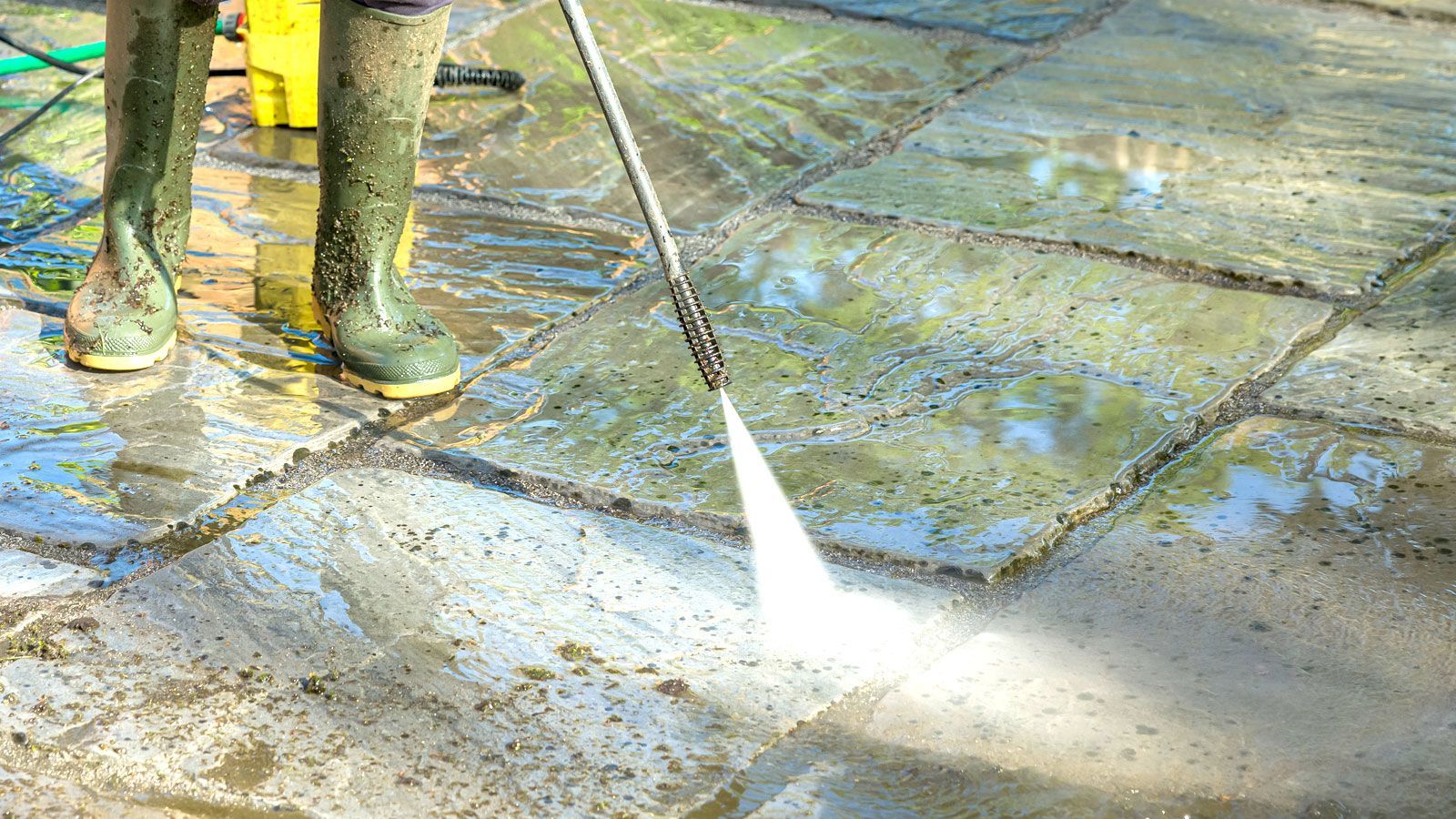
Pressure Washing
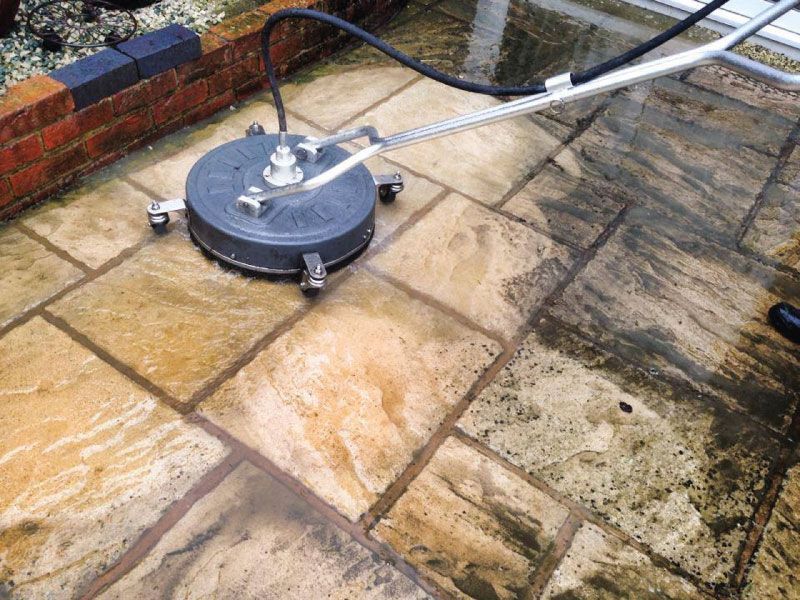
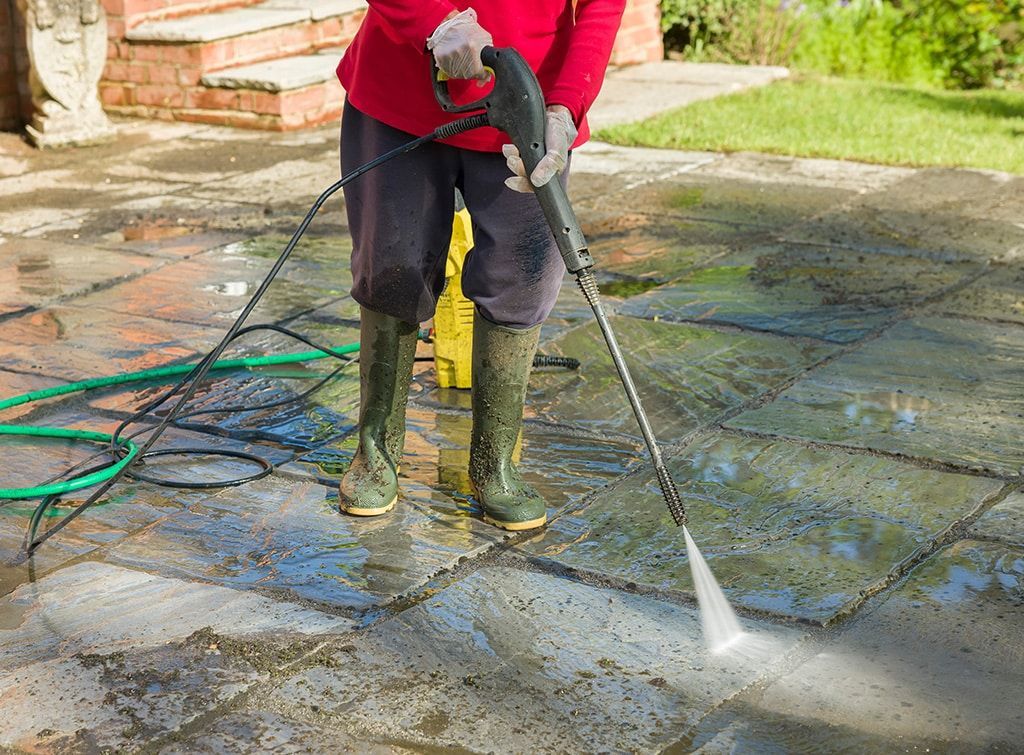
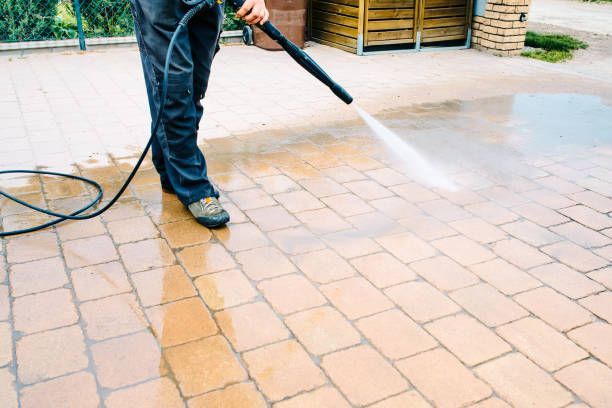
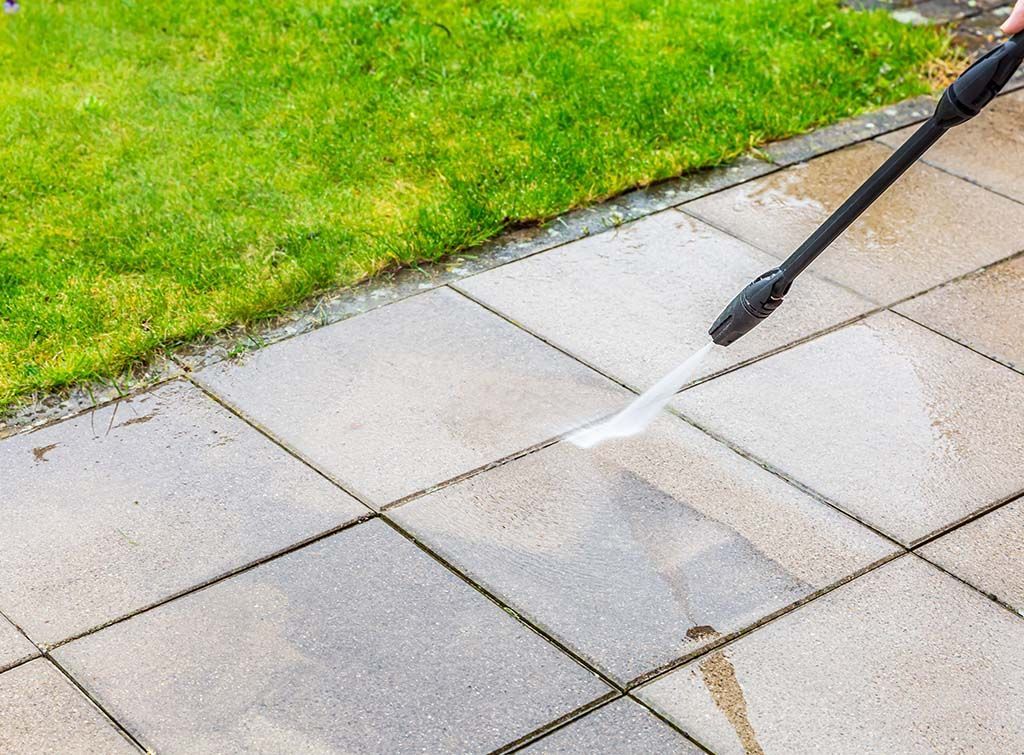
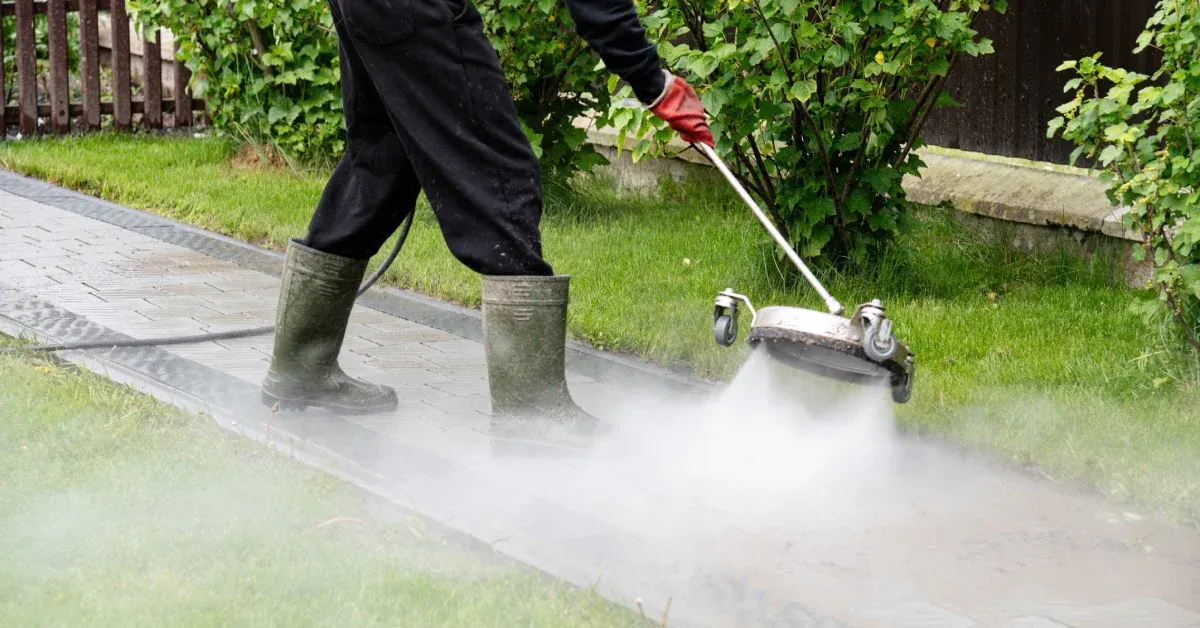
For large patios or deeply embedded stains, pressure washing delivers fast, effective results. A pressure washer sprays water at high force to lift dirt and stains. However, if used improperly, it can damage surface joints or softer stone.
When to Call Professionals:
If you are unsure how to use a pressure washer safely or the stains are extensive, consider contacting
Jimmy’s External Cleaning Services in
Bradford. Our team uses the right pressure settings and techniques for your patio type.
Rinsing and Drying Patio Slabs
Once you have treated the black spots with scrubbing or a cleaner, it’s essential to rinse and dry the area properly:
1. Rinse Thoroughly
Use clean water to wash away all traces of cleaner and loosened dirt. Repeat rinsing until the water runs clear.
2. Avoid Quick Drying in Sun
If possible, allow the patio to air dry naturally rather than under direct sun immediately after cleaning. Sudden drying can leave streaks or marks.
3. Check for Remaining Spots
After drying, inspect the slabs. If black spots remain, repeat the cleaning process or consider a stronger solution.
Thorough rinsing and proper drying ensure that no residue remains to attract more dirt.
Preventing Black Spot Stains
Prevention is better than cure. Here are practical ways to keep black spots from coming back:
1. Improve Drainage
Ensure water does not pool on your patio. Adjust slopes or add drainage where needed.
2. Trim Overhanging Plants
Plants that hang over the patio drop leaves, moisture and pollen, which encourage mould and algae growth.
3. Regularly Sweep and Wash
Frequent sweeping and occasional gentle washing prevent debris from building up and staining slabs.
4. Seal the Surface
Applying a quality patio sealer creates a protective layer that discourages stains and makes cleaning easier.
5. Keep Furniture Clean
Wipe down garden furniture feet or bases regularly to prevent dirt transfer.
Preventive care maintains the patio’s appearance and extends the life of your paving.
Regular Patio Cleaning Routine
Maintaining a regular cleaning schedule keeps your patio looking fresh and free from black spots. A simple routine may include:
- Weekly: Sweep away leaves, dirt and debris.
- Monthly: Light wash with water and gentle brush.
- Seasonally: Deep clean with vinegar solution or commercial cleaner.
- Annually: Consider professional cleaning for a thorough refresh.
Consistency makes future cleaning easier and prevents stubborn stains from forming.
Frequently Asked Questions About How to Clean Black Spots off Patio Slabs
Why do black spots return after cleaning?
Black spots return when moisture and organic debris remain. Improving drainage and removing shade sources helps reduce recurrence.
Can I use bleach on patio slabs?
Bleach can damage certain slabs and harm surrounding plants. Use targeted cleaners or seek professional advice.
What cleaning solution works best for concrete slabs?
A mixture of white vinegar and warm water or a commercial patio cleaner works well. Always test first.
Is pressure washing safe for all patios?
No. Some stones and older slabs may be damaged by high pressure. Professional assessment ensures the right approach.
How often should I seal my patio slabs?
Most patios benefit from sealing every 1–2 years, depending on use and weather exposure.
Expert Help in Bradford
Cleaning black spots off patio slabs can be straightforward with the right methods. However, for stubborn stains, large areas, or peace of mind, professional services deliver reliable results. Jimmy’s External Cleaning Services specialises in how to clean black spots off patio slabs across Bradford and surrounding areas. Our team uses proven techniques to restore your outdoor space and protect it from future staining.
Ready to transform your patio?
👉 Contact
Jimmy’s External Cleaning Services today and schedule a professional patio cleaning in Bradford to effectively clean black spots off patio slabs. Your patio deserves to look its best.