How to Clean Composite Decking - Get Safe Bradford Care
Composite decking is made to be strong, neat, and easier to care for than timber. It does not need sanding, staining, or sealing in the same way as wood. But it still needs regular cleaning. Dirt, moss, algae, food spills, and wet leaves can sit on the boards and make the deck look dull or slippery.
If you want to know how to clean composite decking without causing marks, fading, or surface damage, the key is to use gentle tools, mild soap, warm water, and the right cleaning method.
Many homeowners in Bradford deal with damp weather, shaded gardens, and moss growth. This can make decking dirty faster, even when the boards are good quality. A clean deck is safer underfoot, better looking, and more pleasant to use through spring, summer, and autumn.
Why composite decking still needs cleaning
Many people choose composite decking because it is easier to look after than wood. It is made from a mix of materials, often wood fibres and plastic. Some boards also have a protective outer cap. This helps them resist rot, cracks, and insects.
But easier care does not mean no care.
Outdoor decking sits through rain, wind, frost, pollen, dust, bird mess, food spills, garden soil, and falling leaves. Over time, these can build up on the surface. In shaded areas, green growth can appear. In damp spots, algae can form. Around plant pots, dark rings can show. Under garden furniture, dirt can sit for months.
Bradford homes often have gardens that stay damp in colder months. If a deck does not get much sun, moss and algae can grow faster. This is why regular cleaning is important.
Cleaning helps to:
- Keep the deck safer to walk on
- Remove slippery green growth
- Improve the look of the garden
- Stop dirt from settling deep into grooves
- Protect the finish of the boards
- Make outdoor spaces more welcoming
Knowing how to clean composite decking also helps you avoid common mistakes. The wrong tools can scratch the boards. The wrong chemicals can stain or fade the surface. Too much pressure can damage the cap or force water into gaps.
Good cleaning is not about being rough. It is about being steady, gentle, and careful.
Best tools for cleaning composite decking
You do not need expensive tools for basic composite decking cleaning. In fact, simple tools are often best.
The best tools include:
- A soft outdoor broom
- A soft bristle brush
- A bucket
- Warm water
- Mild washing up liquid or a gentle deck cleaner
- A garden hose
- Microfibre cloths for small marks
- A plastic scraper for stuck dirt
- Gloves
Choose a brush that is firm enough to lift dirt but soft enough not to scratch the board. A stiff wire brush is not safe for composite decking. It can leave marks and damage the surface.
A plastic scraper can help remove mud, leaves, or stuck food from gaps. Never use a metal scraper or sharp blade.
A garden hose is best for rinsing. It gives enough water to clear soap and dirt without forcing water into the boards or joints.
For larger decks, or decks with heavy moss and algae, a professional surface cleaning service is safer. Jimmy's External Cleaning Services uses the right cleaning process for outdoor surfaces in Bradford, including decking, patios, driveways, walls, and other exterior areas.
If you are unsure how to clean composite decking because your deck has stains, green growth, or slippery areas, getting expert help can save time and reduce the risk of damage.
Step 1: remove furniture and plant pots
Start by clearing the deck fully. Move chairs, tables, benches, barbecues, storage boxes, toys, and plant pots away from the area.
This gives you space to clean properly. It also lets you see hidden dirt. Many marks on composite decking appear under plant pots and furniture because water sits there. Leaves and soil can collect around the base of pots. Metal chair legs can sometimes leave marks if they stay wet for a long time.
Lift items carefully. Do not drag heavy furniture across the boards. Dragging can scratch the surface, especially if grit is trapped under the legs.
Once the deck is clear, check for:
- Green patches
- Dark rings
- Food stains
- Grease marks
- Mud in grooves
- Blocked drainage gaps
- Loose debris between boards
This first step is easy, but it makes the rest of the clean much better. If you miss areas under furniture, the deck can look patchy after cleaning.
For Bradford homeowners with small gardens, it may help to move items onto a lawn, path, or driveway while the deck is cleaned. Let the deck dry before putting everything back.
Step 2: sweep the surface well
Before adding water, sweep the whole deck. Use a soft broom and work along the length of the boards.
Sweeping removes loose dirt, dust, leaves, twigs, soil, and grit. This matters because grit can act like sandpaper when you start scrubbing. If you scrub before sweeping, you may rub dirt into the surface.
Pay close attention to gaps between boards. These gaps help water drain away. If they are blocked with leaves or mud, water can sit on the surface. This can lead to slippery patches and more algae growth.
A good sweep also shows where the main problem areas are. You may find that one corner is much greener because it gets less sun. You may see food marks near a seating area. You may find soil marks near planters.
If you are learning how to clean composite decking for the first time, do not skip this step. Many poor cleaning results happen because the surface was not prepared first.
For stubborn dirt between boards, use a plastic tool or soft brush. Do not use a screwdriver, knife, or metal edge.
Step 3: wash with warm water and mild soap
Next, mix warm water with a small amount of mild soap. Washing up liquid is often enough for light dirt. For heavier dirt, use a cleaner that says it is safe for composite decking.
Pour or apply the soapy water over a small area. Do not cover the whole deck at once if the day is warm or sunny, as soap may dry before you rinse it. Work in sections.
Warm water helps loosen dirt, grease, pollen, and general grime. Mild soap lifts surface marks without attacking the deck finish.
Avoid strong bleach, harsh patio acids, oven cleaner, solvent cleaner, and unknown chemical mixes. These can stain, fade, or damage composite boards. They may also harm nearby plants.
Let the soapy water sit for a few minutes, but do not let it dry. This gives it time to soften dirt. Then scrub gently.
When people ask how to clean composite decking, they often expect a strong cleaner to be the answer. Most of the time, the safer answer is warm water, mild soap, and patient scrubbing.
Step 4: scrub along the boards
Use a soft bristle brush and scrub along the length of the boards. Follow the grain or groove pattern. This helps lift dirt from the texture without pushing grime across the surface.
Do not scrub too hard. Composite decking does not need force. A steady motion is better. If a mark does not lift straight away, add more warm soapy water and let it sit for a short time.
For grooved boards, move the brush in the same direction as the grooves. For flat boards with a wood grain finish, follow the grain pattern. This helps keep the finish looking even.
Clean small sections one at a time. This gives you more control and helps stop soap from drying.
Give extra care to:
- Steps
- Edges
- Corners
- Shaded areas
- Spaces near walls
- Areas under plant pots
- Places where food or drinks are used
- Grease spots near barbecues
If the deck feels slippery, it may have algae or biofilm on the surface. Gentle scrubbing can remove some of this, but a specialist clean may be needed if it has spread across the deck.
This is one of the most important parts of how to clean composite decking because the wrong scrubbing tool can cause lasting marks.
Step 5: rinse until no soap is left
After scrubbing, rinse the deck fully with clean water. A garden hose is ideal. Rinse from one end to the other so dirty water flows away.
Keep rinsing until no soap bubbles remain. Leftover soap can dry on the surface and leave a dull film. It can also make the deck feel slippery when wet.
Check gaps between boards and rinse them well. Dirt and soap can collect there. Clear gaps help water drain properly.
Once rinsed, let the deck dry naturally. Do not put furniture and pots back straight away. Give the boards time to dry so trapped water does not sit under items.
When dry, look at the surface from different angles. If you see patchy marks, you may need to repeat a gentle clean on those spots.
A proper rinse is often what separates a clean looking deck from a dull one. Many people clean the boards well but leave soap behind. That can make the finish look cloudy.
How to remove moss and algae from composite decking
Moss and algae are common on decking in Bradford. Shaded gardens, wet weather, and poor airflow can all lead to green growth. It often appears near walls, under trees, close to fences, and in corners where water dries slowly.
To remove moss and algae safely, first sweep away loose growth. Then wash the area with warm water and a mild cleaner. Scrub gently with a soft brush. Rinse well.
If the growth is heavy, use a cleaning product that is safe for composite decking. Always read the label. Test a small hidden area first. Do not use harsh bleach unless the board maker clearly says it is safe.
Moss can grow in gaps and around edges. Be careful when clearing it. Do not dig into the boards with sharp tools.
To reduce moss and algae coming back:
- Keep the deck swept
- Move pots from time to time
- Trim plants that block sunlight
- Clear leaves quickly
- Keep drainage gaps open
- Avoid leaving damp mats on the boards
- Clean shaded areas more often
If the deck is very slippery, do not take risks. A fall can happen quickly. In that case, contact Jimmy's External Cleaning Services for safe composite decking cleaning in Bradford. A professional clean can remove green growth more evenly and help improve grip.
This is a key part of
how to clean composite decking in local homes, especially where gardens stay damp for long periods.
How to clean food, drink, and grease marks
Composite decking is often used for family meals, barbecues, parties, and morning coffee. Spills happen. The best way to prevent stains is to clean them quickly.
For food and drink marks, blot the area first. Do not rub hard at the start, as this can spread the spill. Use warm soapy water and a soft cloth or brush. Rinse well.
For grease marks, act fast. Grease from barbecues, cooking oil, and sauces can cling to the surface. Use warm water with mild washing up liquid because it helps break down grease. Scrub gently along the board, then rinse.
For wine, coffee, juice, or soft drink spills, wash the area as soon as possible. Sugary drinks can leave sticky patches that attract dirt.
For bird mess, remove it gently with warm water. Let it soften first if it has dried. Do not scrape hard with metal tools.
For mud, let wet mud dry slightly, then brush off as much as you can before washing. This stops it from spreading.
For plant pot rings, move the pot and clean the area with mild soap and warm water. If the mark has been there a long time, it may need more than one clean.
The golden rule is simple. Clean spills early. The longer a mark sits, the harder it can be to remove.
If you are not sure
how to clean composite decking after a grease spill or stubborn stain, avoid strong chemicals. Call a local professional before making the mark worse.
Can you pressure wash composite decking?
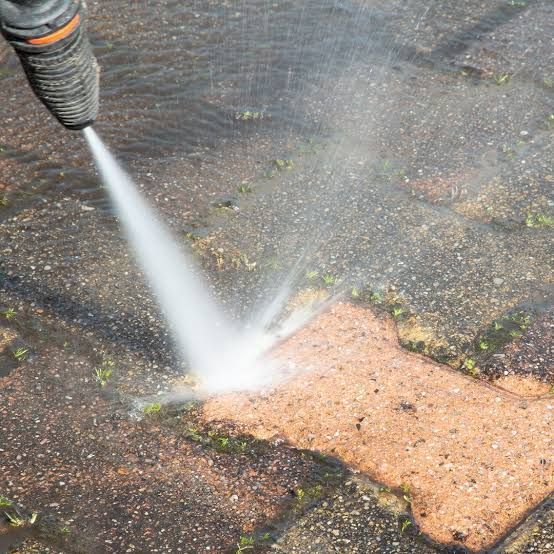
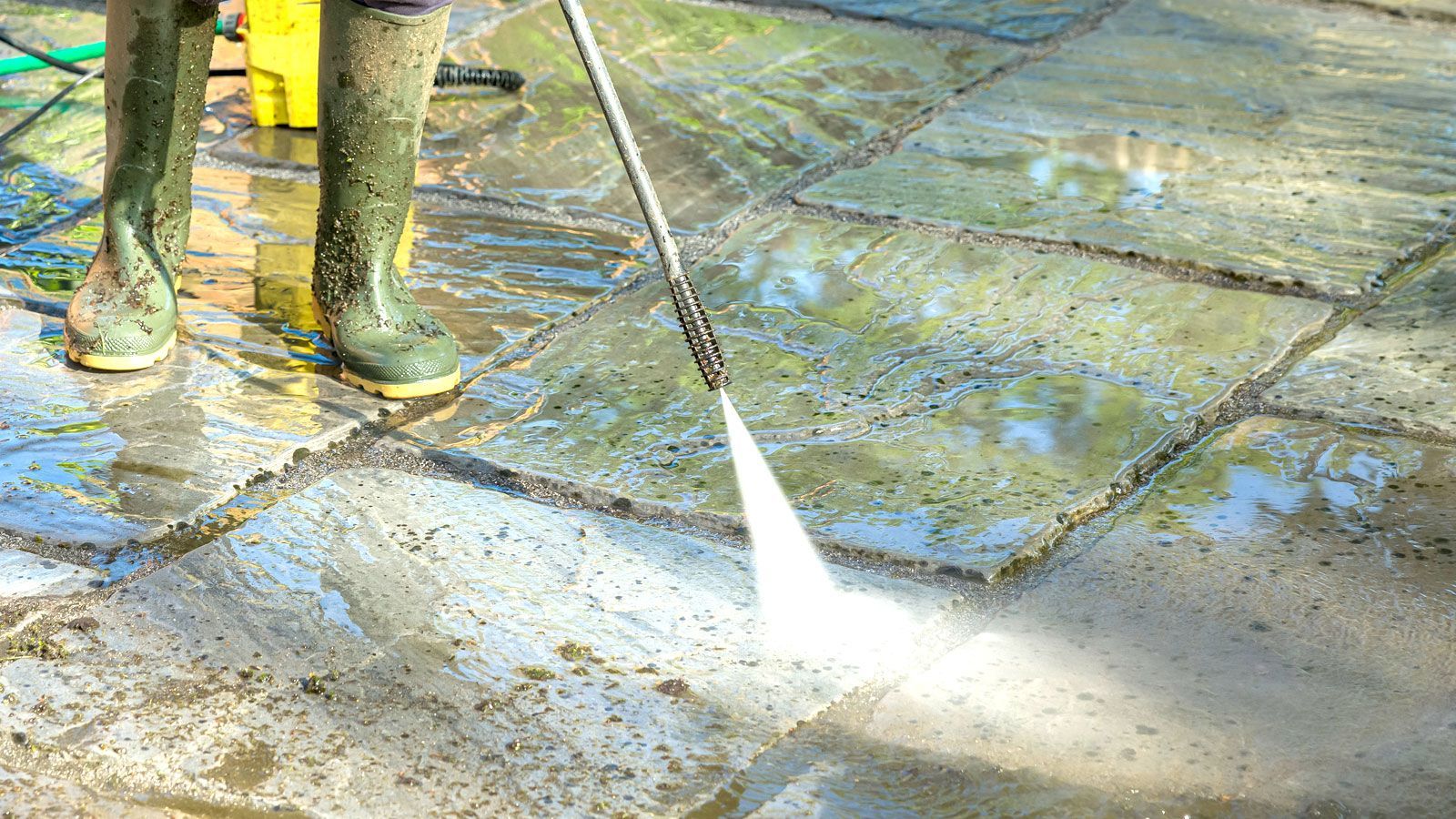
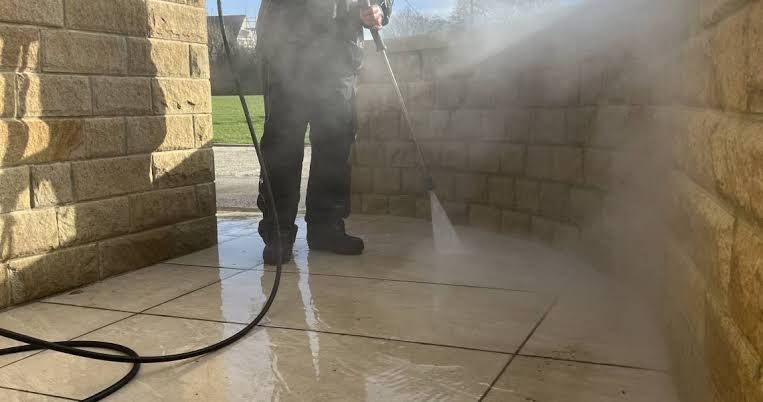
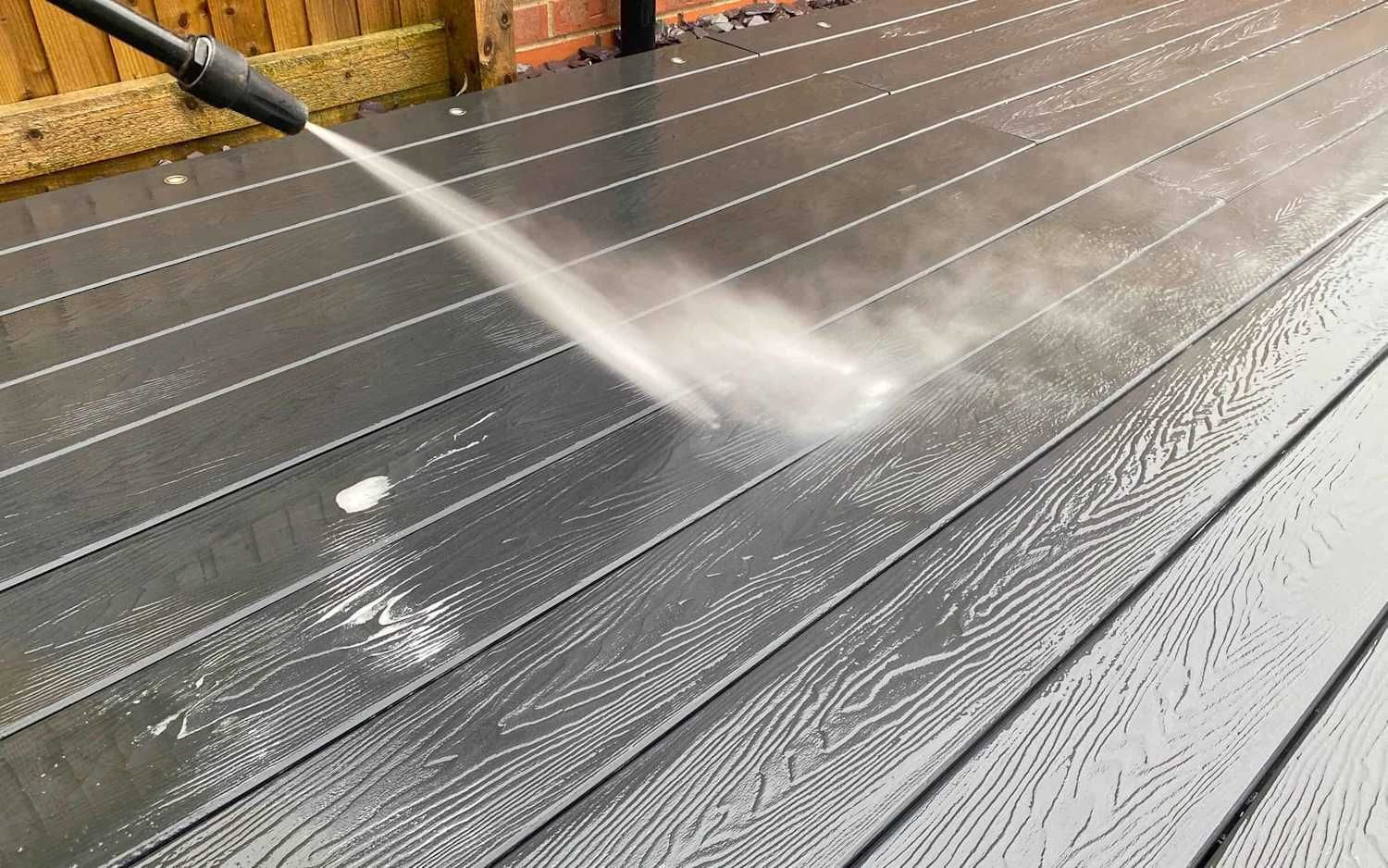
Yes, some composite decking can be pressure washed, but it must be done very carefully. Many deck makers warn against high pressure because it can damage the surface, lift the cap, or leave lines.
If you use too much pressure, hold the nozzle too close, or use the wrong spray tip, you can mark the boards. Once the surface is damaged, it may not return to its original finish.
For this reason, a garden hose and soft brush are safer for most home cleaning.
If pressure washing is used, it should usually be:
- Low pressure
- Wide spray pattern
- Kept at a safe distance
- Moved evenly
- Used along the boards
- Tested on a hidden area first
Never hold the nozzle close to one spot. Never use a narrow jet. Never use pressure to blast dirt out of the boards.
Many homeowners search how to clean composite decking because they want a fast method. Pressure washing can seem fast, but it can also be risky if done wrong.
For a safer result, use
Jimmy's External Cleaning Services. Our team cleans exterior surfaces across Bradford and understands how to choose the right method for each surface. Composite decking needs care, not guesswork.
What not to use on composite decking
The wrong product or tool can damage composite decking. Before cleaning, it helps to know what to avoid.
Do not use wire brushes. They can scratch the surface.
Do not use metal scrapers. They can cut or gouge the boards.
Do not use strong bleach unless the deck maker says it is safe.
Do not use acid based patio cleaners.
Do not use solvent cleaners.
Do not use paint stripper.
Do not use sandpaper.
Do not use a narrow pressure washer jet.
Do not drag furniture across the deck.
Do not leave wet leaves sitting for weeks.
Do not let soap dry on the boards.
Do not mix chemicals.
Some people try to clean outdoor surfaces with whatever they already have in the garage. That can be a costly mistake. Composite decking may look tough, but its surface still needs care.
When in doubt, choose the mildest safe option first. Warm water, mild soap, and a soft brush should be your starting point.
If the deck needs more than this, speak to a local cleaning expert.
Jimmy's External Cleaning Services can assess your decking and choose a safe cleaning method for your home in Bradford.
Professional composite decking cleaning in Bradford
If your deck is lightly dirty, you can clean it yourself with the steps above. But there are times when professional cleaning is the better choice.
You may need expert help if:
- The deck is very slippery
- Moss and algae keep coming back
- There are dark stains or grease marks
- The decking has not been cleaned for years
- You are worried about pressure washing damage
- The deck covers a large area
- You want a clean finish before selling or renting a home
- You are getting the garden ready for guests
Jimmy's External Cleaning Services provides professional exterior cleaning in Bradford and nearby areas. We help homeowners clean outdoor spaces safely and properly. Our service is a good choice if you want your composite decking cleaned without harsh treatment.
We work across Bradford, including areas such as Shipley, Bingley, Baildon, Idle, Wibsey, Queensbury, Thornton, Great Horton, Low Moor, Allerton, Apperley Bridge, and nearby places.
A local service matters because Bradford weather can be hard on outdoor surfaces. Rain, shade, moss, and winter grime can all build up. We understand the kind of dirt local homes face and how to clean it with care.
When you choose Jimmy's External Cleaning Services, you get:
- Careful surface checks
- Safe cleaning methods
- Attention to edges and corners
- Help with moss and algae
- A tidy finish
- Friendly local service
- Clear advice for future care
If you have searched
how to clean composite decking because your boards look dull, green, or slippery, our team can help. Visit
externalcleaningbradford.co.uk to get in touch and ask about composite
decking cleaning in Bradford.
Frequently Asked Questions About How to Clean Composite Decking
How often should I clean composite decking?
Most composite decking should be cleaned at least twice a year. A good clean in spring helps remove winter dirt. Another clean in autumn helps clear leaves, moss, and grime before colder weather.
If your deck is under trees, near plants, or in a shaded Bradford garden, you may need to clean it more often.
What is the best cleaner for composite decking?
The best cleaner is usually warm water with mild soap for normal dirt. For moss, algae, or tougher grime, use a cleaner that is marked safe for composite decking.
Always test a small hidden area first. Avoid harsh chemicals.
Can I use washing up liquid on composite decking?
Yes, mild washing up liquid mixed with warm water is fine for many light cleaning jobs. Use only a small amount and rinse very well after scrubbing.
Can bleach damage composite decking?
Bleach can damage or fade some composite decking. It can also harm plants near the deck. Do not use bleach unless the board maker clearly says it is safe for your type of decking.
Can I use vinegar on composite decking?
Some people use diluted vinegar for light cleaning, but it is not always the best choice. It may not be suitable for all boards. A mild soap or a cleaner made for composite decking is usually safer.
Why is my composite decking slippery?
Composite decking can become slippery when moss, algae, wet leaves, grease, or dirt sit on the surface. Shaded and damp areas are more likely to become slippery.
Clean the deck well and keep it clear of leaves. If it stays slippery, call Jimmy's External Cleaning Services for help.
Will pressure washing ruin composite decking?
Pressure washing can damage composite decking if the pressure is too strong, the nozzle is too close, or the wrong spray is used. A garden hose and soft brush are safer for normal cleaning.
For deep cleaning, use a professional service that understands composite surfaces.
How do I remove black spots from composite decking?
Black spots may come from mould, mildew, dirt, grease, or plant matter. Start with warm soapy water and gentle scrubbing. If the marks stay, use a cleaner made for composite decking or call a professional.
Do not use strong chemicals without checking they are safe.
How do I stop moss growing back?
Keep the deck swept, clear leaves often, move plant pots, improve airflow, and cut back plants that block light. Regular cleaning helps reduce moss growth.
In damp Bradford gardens, moss may return more quickly, so routine care is important.
Is professional cleaning worth it?
Yes, professional cleaning is worth it if your deck is slippery, stained, heavily soiled, or large. It also helps if you are worried about damaging the boards.
Jimmy's External Cleaning Services offers professional composite decking cleaning in Bradford. We can clean your outdoor space safely and help your deck look fresh again.
Who can help me with composite decking cleaning in Bradford?
For local help, contact Jimmy's External Cleaning Services. We clean decking and other exterior surfaces across Bradford and nearby areas. If you want a safer, cleaner, and better looking deck, visit externalcleaningbradford.co.uk and ask for a quote.
When done the right way,
how to clean composite decking is simple. Use gentle tools, mild soap, clean water, and regular care. For tougher dirt, green growth, or slippery boards, trust
Jimmy's External Cleaning Services for professional composite decking cleaning in Bradford.